Thursday, August 18, 2016

Citizenship Test Webquest


Citizenship Test Homework 6 as Webquest

You have the power to discover the answers for yourself!
Follow the links to find the information. You are working on the skill of finding key details.

Watch the biography of Thomas Jefferson
  1. Who wrote the Declaration of Independence?
  2. When was the Declaration of Independence adopted?

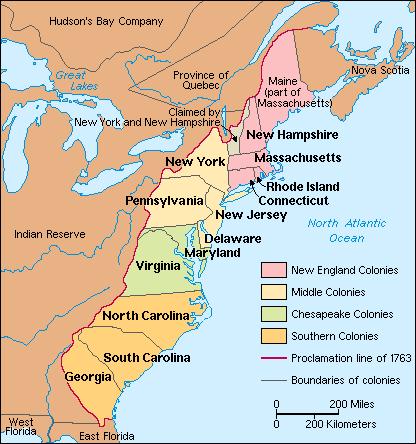
  1. There were 13 original states. Name three.

Read about the history of the American flag.
  1. Why does the flag have 13 stripes?
  2. Why does the flag have 50 stars?

Watch a video about the Constitutional Convention
  1. What happened at the Constitutional Convention?
  2. When was the Constitution written?

Read this article about the Federalist Papers.
  1. The Federalist Papers supported the passing of the U.S. Constitution. Name one of the writers.

Watch this video.
  1. Name one thing Benjamin Franklin is famous for?

Read this to understand Presidential Succession
  1. If the President can no longer serve, who becomes President?
  2. If both the President and the Vice President can no longer serve, who becomes President?

  1. Who is the Commander and Chief of the military?
  2. Who signs bills into laws?

Read about the role of the President’s cabinet

  1. What does the President’s Cabinet do?
  2. What are two Cabinet-level positions?

Thursday, July 28, 2016

Trip to the Milwaukee Public Museum

Next week we are traveling to the 
Milwaukee Public Museum! 

We are taking this field trip for many reasons. First, learning shouldn't just happen in the classroom. This is a chance to get a change of scenery. While reading is part of the experience of going to a museum, the majority of learning happens through seeing and experiencing. I hope what you see and experience at the museum will expand your mind in new ways. The Milwaukee Public Museum is a resource that we pay for with our tax dollars. To use this resource, we need to know how to "read" an exhibit. In addition, knowing different vocabulary and historical people and events will help us make more sense of the museum. 

What can you expect from this trip?

Arrive on time!!!! 5pm!

First half: Group Activity
               Tour of immigrant groups. Streets of Old Milwaukee.

Second half: Your choice. Time to explore!

Leave museum promptly at 8pm. 


What will you do? 
See 
Hear
Read
Think--Make meaning!

Below you will find tasks to prepare you for this trip. 

1. Complete the Questioning Chart after examining the photo and plaque. 


Here is the first exhibit you see at the Milwaukee Public Museum when you walk up the staircase. 


Read the plaque that goes with this exhibit.


The plaque says: This area is designed to suggest late Victorian museum exhibitions. At that time, museums of natural history often emphasized collection of the beautiful, the rare, and the unusual. A museum visit was a vivid way of experiencing the exotic. Collections from wide-ranging geographic areas and cultures, past and present, inspired visitors to learn more about their world. 
Together, after more than a century of work, staff members at the Milwaukee Public Museum continue to develop and study collections. Current research questions, not the lure of the extraordinary, guide modern collection activities. Still museums such as ours continue to help us better understand and appreciate the diversity of life on earth, and to foster in all of us, a sense of wonder. 


2. We will spend time in the exhibit called the Streets of Old Milwaukee. What's that?

The Streets of Old Milwaukee

2. This exhibit was just renovated. Watch this video to hear about how they made choices during the renovations. 
3. Go to this website. Scroll down and click on all the photos. Read the captions. 
4. What is a nickelodeon? Find out here.  Read the first paragraph of this article. 
5. Who are Sully and Susanna Watson? Find out here. Scroll down this list of famous Milwaukeeans and find the Watsons at the very end. 

Wednesday, July 13, 2016

Getting Inside an Image/Photograph

Getting Inside an Image/Photograph
A Series of Haikus


Look at a picture
Examine all four quadrants
Who or what is there?

Season? Time of day?
What actions are happening?
In and out of photo

Choose a spot to be
Put yourself in the photo
What do you feel there?

Write a story there
Determine what happens next
Get lost in writing

Monday, July 11, 2016

Recipe for Expanding Vocabulary

Marzano sure serves up an excellent literate student. This recipe is based off of Marzano's six steps to teach vocabulary. 


1/2 cup teacher's description
1/3 cup teacher's explanation
3/4 cup teacher's examples
1/2 cup student's description
1/3 cup student's explanation
3/4 cup student's examples
1/2 cup student's graphic
1 quart notebook of vocabulary activities
1 pint group discussion
3 gallons authentic vocabulary exercises and games


To make Student Friendly Vocabulary Explanations 
Mix teacher's description, explanation, and examples to create the Student Friendly Vocabulary Explanation's explanation. Stir in student's description, explanation, examples, and graphic to create the Student Friendly Vocabulary Explanation's example and image. Spread evenly on a notebook to keep the graphic organizer long term. Sprinkle in class discussion of the word. Then bake in the authentic vocabulary exercises in admit slips. The admit slip will have students finish sentence stems. (Sentence stems as a vocabulary exercise come from Buehl's Classroom Strategies, pg 209).

To make the Frayer Model
Take student's background knowledge out of the fridge to soften. In pairs, add student's description, explanation, examples, and graphics together. Stir in group discussion with a pinch of the teacher's description, explanation, and examples. After group discussion solidifies, freeze ideas on graphic organizer in a notebook. Enjoy with the authentic vocabulary game that has students choose whether a picture or phrase is an example or nonexample of the vocabulary word. (Example/nonexamples is a vocabulary exercise on page 208 of Buehl's Classroom Strategies.)


Thursday, July 7, 2016

Recipe for Literacy

Mmmmmmm. What's that you smell?

LEARNING!

That's right! And this is about to fire up your tastebuds! This learning isn't bland old telling. This recipe isn't for weak and watery memorization and repetition. The exquisite and delectable cooking style, literacy, inspires this recipe. Literacy is more than reading and writing. Follow this recipe and take a bite out of knowledge.

Ingredients
Dry Ingredients (Internal Modes of Communication
2 cups Listening (boredom-free for those who are boredom-intolerant)
2 cups  Reading (1 cup informative texts; 1 cup literary texts)
2 cups Viewing

Wet Ingredients (External Modes of Communication)
2 cups Speaking (1/2 cup in partners; 1/2 cup in small groups; 1/2 cup with whole class; 1/2 cup public speaking)
2 cups Writing (Only certified authentic tasks)
2 cups Representing


Directions
Choose one or more dry ingredients and mix with one or more wet ingredients. Stir until doughy and then knead the dough. Keep kneading or start a new recipe with a new combination of ingredients.

Don't be fooled by the short directions. This is not a simple recipe. This is a base recipe, like adding vinegar and oil to make a salad dressing.  What herbs, mustards, and juices can we add? How can you customize? This recipe captures the fundamental interaction of learning through literacy: something comes in, something comes out. For every action, there should be a reaction. Literacy happens when learners interact with ideas they hear, read, or see. They should think about them and show learning and growth through putting something from their unique brain, back out into the world: a verbal, written, or visual thought. Depending on the learning target in the lesson, teachers can customize this recipe. The most important moment is when the student has their hands in the dough, kneading and thinking over and over. Literacy happens with learners knead, play, interact, and sculpt the world around them.


Thursday, November 19, 2015

Migrant Connections and Disconnections

Migrant Connections and Disconnections: 
Rethinking Thanksgiving

This week, Americans celebrate that a group of migrants made a dangerous journey to a place far away to start a new life. Yes, I’m talking about the Pilgrims who Americans remember each Thanksgiving. The Pilgrims migrated from England to North America because they were harassed, jailed, or fined because of their religious beliefs. We celebrate the Pilgrims migration to a new place for a new life that grew to become the country we all now reside: the United States of America. We don’t usually call the Pilgrims migrants, but we certainly could.

Today's world has many migrants. The United States experiences significant immigration from Central and South American countries and Europe is experiencing a migration of thousands of refugees from Syria and other war-torn Middle Eastern countries.

What about the migrants of today: Hispanic migrants or Syrian migrants? Are their stories similar to the Pilgrims?


Learn more about these issues and events!
Click on a link to learn more about English migrants (the Pilgrims), Latino migrants, and Middle Eastern migrants.

The First English Migration
1. Read the first three paragraphs on this site to learn about why the Pilgrims migrated. If you have time or interest, continue reading this site to learn about their first migration to Holland and then on to North America. 

            2. Journey on the Mayflower.Learn about what life was like for the English migrants.

            3.  Tour the Ship. Learn about the mode of transit they used.

Latino Migration
            Or read the transcript.

Syrian/Middle Eastern Migration
3. Watch this video. Fast forward to 0:55. Stop watching at 3:45, or the “ID” section.

You Respond: WRITE!

Pick a persona of one of the migrants, historical or current. (Example, choose to be a Pilgrim, a Latino migrant, or a Syrian refugee). 

Choose a different migrant to address in a letter.

Write a letter to that fictional migrant. 

Synthesize or include at least three details you learned in your research today.

Focus on connections and disconnections; or similarities and differences. 

Consider discussing the third migrant group in your letter. (For example, if you are a Syrian refugee writing to a Latino migrant, inform the Latino migrant about the Pilgrims.)

Write at least 2 paragraphs for the body of your letter in your notebook. 

See letter format below: Include fictional address (Where are you writing from?), date (from history or today), greeting, body, and closing signature.


Still need ideas about what to write about?
You just learned about three groups that all share a common life event: migration. What would they say to each other in a letter, knowing they had this similarity? What would a Pilgrim, a Latino migrant, and a Syrian refugee talk about? What would they have in common? What would be their differences?